Table of Contents
Exploring frutas em inglês atividade is an engaging way to practice English while learning the names of fruits and related actions. This type of activity combines language learning with physical or creative tasks, making it memorable for students and hobbyists alike. By associating each fruit with a verb or a short phrase, learners build vocabulary, pronunciation, and confidence in real contexts. The blend of movement, visuals, and speech turns a simple list of fruits into a dynamic language workout.
Why Use Frutas Em Inglês Atividade in Learning
Using frutas em inglês atividade in lessons helps bridge the gap between memorization and real use. When you attach words to actions, your brain creates stronger connections, which makes recall easier during conversations or tests. These activities are adaptable for different ages and levels, from young beginners to adults refining fluency. They also introduce useful verbs such as peel, slice, squeeze, and taste, expanding your ability to describe routines around food.
Another benefit is cultural awareness, since fruits vary by region and language. Discussing frutas em inglês atividade in groups encourages collaboration, negotiation, and playful competition. Learners compare preferences, talk about colors and textures, and practice polite phrases like may I have the apple, please. Over time, these small interactions build fluency and reduce the fear of speaking.
Simple Warm-Up Activities for Vocabulary Building
Start with a basic frutas em inglês atividade where everyone repeats the name of a fruit clearly and then performs a simple gesture. For example, say orange while mimicking peeling a citrus fruit, or act out banana by pretending to hold and eat it. This warm-up activates listening and speaking skills while keeping energy high. You can also add sounds, like the crunch of an apple, to involve imagination and pronunciation.
Use flashcards or drawings to show each fruit and ask learners to repeat the word three times before doing the action. Gradually mix them up so they must react quickly, saying the correct fruit in English before acting. This reinforces memory through both visual and kinesthetic channels, which is especially helpful for visual learners and restless students.
- Flashcard show and name
- Gesture and sound imitation
- Quick reaction games
Interactive Games to Practice Speaking and Listening
Turning frutas em inglês atividade into a game boosts motivation and repetition without feeling like studying. One popular option is a fruit relay where teams run to a board, read a fruit name, perform an action, and race back. This adds movement and time pressure, which sharpens quick thinking and pronunciation under mild stress.
Another engaging game is the guessing circle, where one person acts out a fruit through gestures while others shout the English name. Encourage full sentences, such as I am peeling the banana or She is eating an apple, to practice structure alongside vocabulary. Rotate roles so everyone gets a chance to act, speak, and listen in a supportive environment.
Creative Role-Plays for Real-Life Context
In a market or kitchen role-play, frutas em inglês atividade becomes a tool for practical communication. Learners play customers, vendors, or chefs, using phrases like I would like three apples, Do you have mangoes, and How much are these strawberries. These scenarios teach polite expressions, numbers, and measurements in context.
Add challenges such as limited vocabulary or time constraints to encourage improvisation. For instance, ask students to plan a fruit salad using only fruits they can name in English, discussing choices with partners. This nurtures negotiation skills, turn-taking, and confidence in spontaneous speech.
Integrating Grammar and Pronunciation
During frutas em inglês atividade, you can naturally highlight singular and plural forms, such as one grape and many grapes, or an orange versus some oranges. Ask learners to repeat patterns and then create their own sentences during the activity. This helps them notice grammar rules without tedious drills.
Focus on tricky sounds like th in thought or the short a in apple by embedding them in fruit names. Use minimal pairs, such as pear and bear, or plum and bloom, in action sentences. Repeat after me drills combined with gestures make pronunciation practice feel playful and low-pressure.
Related Videos
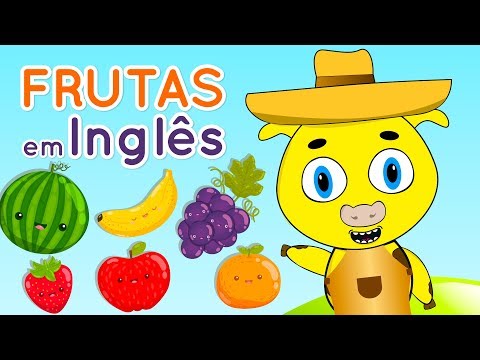
Frutas em inglês - Nome das frutas em inglês - Como falar as frutas em inglês
Frutas em inglês - Nome das frutas em inglês - Como falar as frutas em ingles Aprenda a falar o nome das frutas em inglês, essa ...
Extending the Activity with Art and Writing
After energetic games, shift to a quieter frutas em inglês atividade by having learners draw their favorite fruit and label it. They can then write a short paragraph describing taste, color, and where it grows. This transition supports different learning styles and consolidates vocabulary through writing.
Advanced groups can keep a fruit journal in English, tracking new words each week and using them in sentences. Encourage them to add adjectives, such as sweet, sour, juicy, or crisp, and even compare fruits using than or the most. These tasks build long-term retention and improve overall language accuracy.
Whether you are teaching in a classroom or studying alone, frutas em inglês atividade offers a flexible, enjoyable path to stronger English skills. By mixing speaking, movement, creativity, and grammar, these activities keep learners engaged and eager to practice again. With consistent use, you will notice clearer pronunciation, richer vocabulary, and more confidence when talking about fruits in real situations.
